
Currently, the investor and his family's net worth in listed firms stands at Rs 8,517 crore, compared to Rs 8,388 crore as of March 31, 2020.
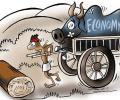
'We expect a pick-up in the second half of the current fiscal. But before that, data is likely to show a further slowdown. The second quarter print is likely to be worse than the first quarter,' said a senior official.

In the manufacturing sector, output is expected to decline by about 70 per cent as only food-processing, and drugs and pharma industries are allowed to operate while other segments, such as engineering and metals, have shut operations.

Lenders can now initiate recovery proceedings since the SC has lifted the standstill on asset classification, which protected stressed accounts from slipping into NPAs.

Indian auto industry's dependence on China is high and it will continue to be so in the BS-VI era and as the country moves towards electric mobility. Domestic players lack both technological competence and the sheer pricing advantage that support Chinese imports.
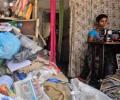
MUDRA bank will help microfinancing firms to lend more.

Following the footsteps of ICRA and CRISIL on rating corporate governance, credit rating agency Fitch will also take up such an exercise soon.

For 2021-22, it projected the economy to clock a growth of 10.6 per cent.

The first to see price hikes will be soaps. In the past six months, domestic palm oil prices have increased by 46 per cent. Palm oil is a key input going into soaps.
A sharp rise in construction and funding costs will increase costs for builders and prevent a reduction in home prices.
Clearly, the domestic market has taken sharp knocks in April, which is likely to be visible in May as well, said analysts tracking the market, as FMCG companies are grappling with improving capacity utilisation and dealing with labour shortage.
.jpg)
Q1 results indicate more pain ahead, as slowdown has spread to more sectors, pricing power has come down and rising interest cost is eating into profits.

The capital markets watchdog had set up an expert panel in March to suggest new measures to regulate insider trading.

The estimates from Crisil come at a time when the economy has witnessed a a downward revision of growth estimates by analysts for a better part of the ongoing fiscal because of troubles on the global and domestic front.
Leading economists said on Tuesday the Reserve Bank of India decision to keep the key policy rates unchanged was on expected lines and expressed hope that with inflation now treading down it would change its policy stance by next month.

For fast-moving consumer goods, growth is likely to be tepid.

The national carrier, which is already struggling with its fuel payments, spends Rs 6,000-7,000 crore annually on fuel. A 10 per cent hike in crude price would mean over Rs 50-58 crore of extra costs for the airline.

The biggest challenge is crude oil's sustained rally - it is nearing $80 a barrel - stoking inflationary pressures and consequent price hikes in the sector.
Some of the top indebted companies likely to face financial headwinds in the coming quarters include NTPC, PowerGrid, Tata Steel, Adani Power, JSW Steel, UPL, and Steel Authority of India. Together these 201 companies owed Rs 14.9 trillion to their lenders at the end of September 30, 2019, up 4.1 per cent year-on-year (YoY) during the first half of FY20.
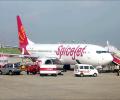
Domestic airlines on Thursday welcomed the 12.5 per cent cut in jet fuel prices, terming it as a much-needed relief but ruled out any immediate reduction in fares.

The growth in eight infrastructure industries slowed to 2.3 per cent in May mainly due to contraction in crude oil, natural gas, coal and fertilizer output.

IIM-A announced a tie-up with three corporate houses -- CRISIL, ATS Infra and SAP -- for research in financial markets, infrastructure and entrepreneurship.

St Jude India ChildCare Centres is a unique organisation which runs residential homes for families of children who need to undergo long-term cancer treatment. Its 37 centres close to India's premier cancer hospitals give children a fighting chance against the disease.

As even bigger road construction players are not willing to bet on BOT projects., NHAI will have to rethink its thrust on the BOT model.
Like everything else, the structure of banks may change, and banks may depend more on digital technologies and artificial intelligence for dealing with both their customers and employees.

Industrialists affirm their belief that the adverse effects of demonetisation and the goods and services tax are finally over.

While the UK will possibly go into recession, the bigger fear is copycat referendums from other EU nations.

Trust today means more than the belief that a brands' products will work as advertised; consumers want to believe that the company truly cares for its customers.

Liquidity pressures to top agenda of RBI's meeting with bankers.
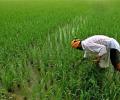
A pick-up in farmer income could have a cascading impact on the rural economy, though agriculture is becoming a smaller part of India's overall rural incomes.

Since March 2020, WPI food inflation rate continued to fall but the CPI-food inflation rose, signaling a breakdown in supply chain from the mandis to the final household.

Long-term funding was a requirement for infrastructure projects, and asset-liability mismatch in the banking system, impacts the access to finance for infrastructure projects. One of the key challenges would, however, be to get private sector back into investing.

Crisil's experience is that these reports improve volumes for the companies covered.

Balanced funds are generally equity-oriented with at least 65 per cent exposure to equities and the rest of the corpus invested in fixed income securities

According to a report by rating and research agency CRISIL, it now takes six years to recover the premium-between Rs 100,000 on small cars and Rs 300,000 on luxury sedans-paid for diesel variants.

Rating agency Crisil said on Friday that Asian spot LNG prices are expected to go up in the short term due to power generation disruptions in Japan.

A freely convertible country must have sound macroeconomic policies.

The government kept its nerve in the face of a massive shock. It chose not to resort to a massive fiscal stimulus. It focused instead on providing liquidity support and easing restrictions on movement in stages, observes T T Ram Mohan.

This would help investors to get a fair understanding of the companies, Sebi chairman, C B Bhave said while launching independent equity research by Crisil in Mumbai on Tuesday.
 © 2026 Rediff.com - Advertise with us - Disclaimer - Privacy Policy - Sitemap - Feedback - About us - Terms of use - Grievances